
Object Collection’s “Actua 1” at Collapsable Hole
by Joshua Dumas
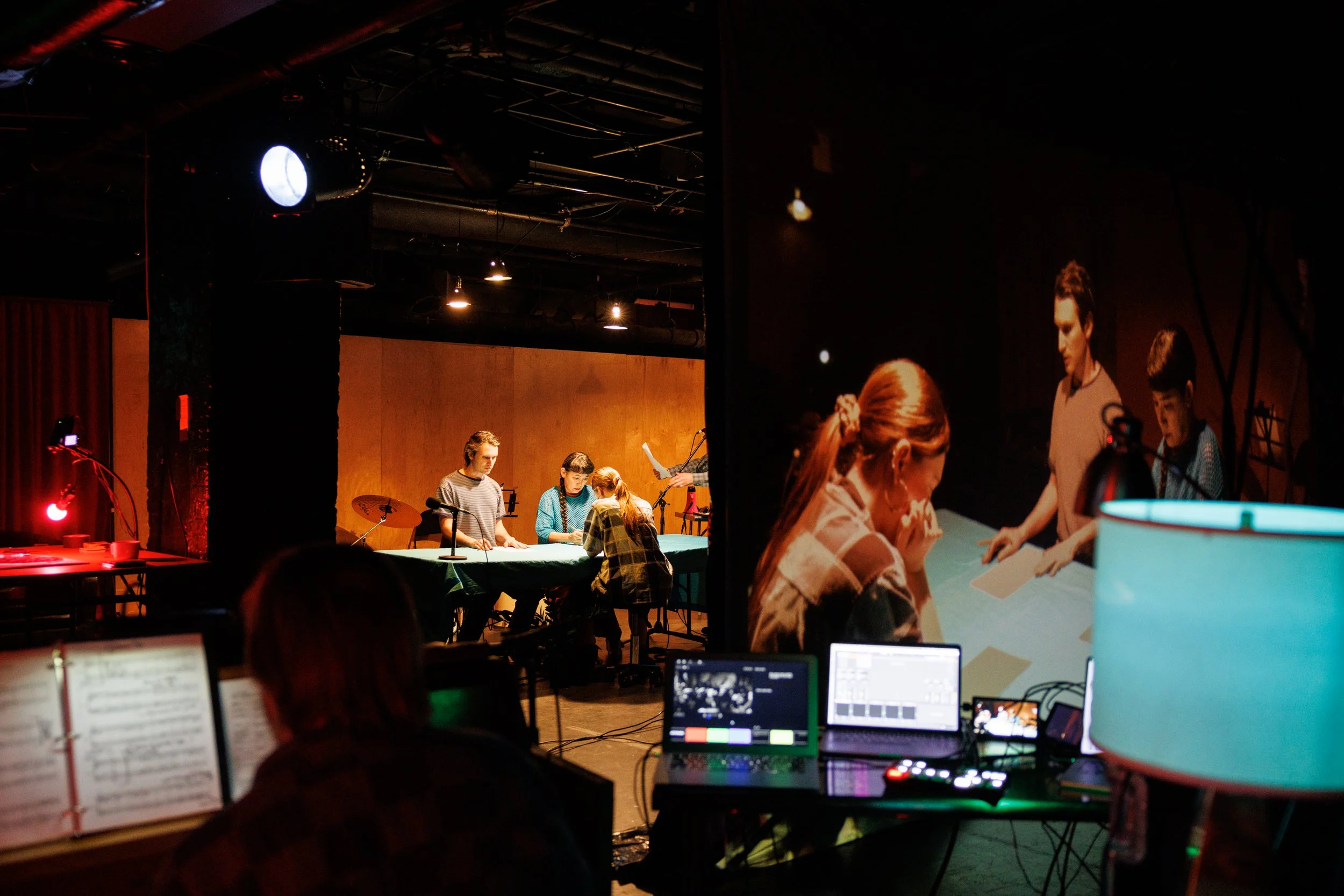
photo: Maria Baranova
In March 2026, Object Collection presents a multimedia collage of live art, music, expanded cinema, theatre, performance, an anxious glitch clown clutter, a tone poem, a Fluxus score, three houseplants, a fever dream, an out-of-tune piano through a broken megaphone. We watch a movie screen. But overhear and catch glimpses of the construction of the video images we’ll see. Performers drag tripods and cameras and mic stands to corners of the space just out of eyeshot, until the camera blinks on into live feed, and we are in an interrogation, or a space-age dance break, or a very loud and strange meeting with HR. We know something’s happening right over there, but are only able to experience it via the lens and projection. The players are actors, stagehands, boom operators, cinematographers, puppeteers, musicians; they are taking the plane apart on the runway, and dismantling it still, as it flies.
In May 1968, anti-capitalist, anti-authoritarian, anti-imperialist student demonstrations at Nanterre University in Paris crest into a broad public mobilization, a general strike of 10 million workers, all across France. A moment of near-revolution.
In May 1968, a 20 year old Philippe Garrel is there, filming. His camera trained in accusation, upon the Compagnies Républicaines de Sécurité, a division of the French National Police. But the result, a short documentary film called “Actua One”, a work he describes as a “revolutionary newsreel”, never screens, and the only print is lost.
In 1970, Jean-Luc Godard, in the journal Afterimage, writes “Que Faire” [What is to be done?]. It begins:
“1. We must make political films.”
“2. We must make films politically.”
In 2004, writer-director Kara Feely and composer-musician Travis Just form Object Collection, a Brooklyn-based multimedia performance group.
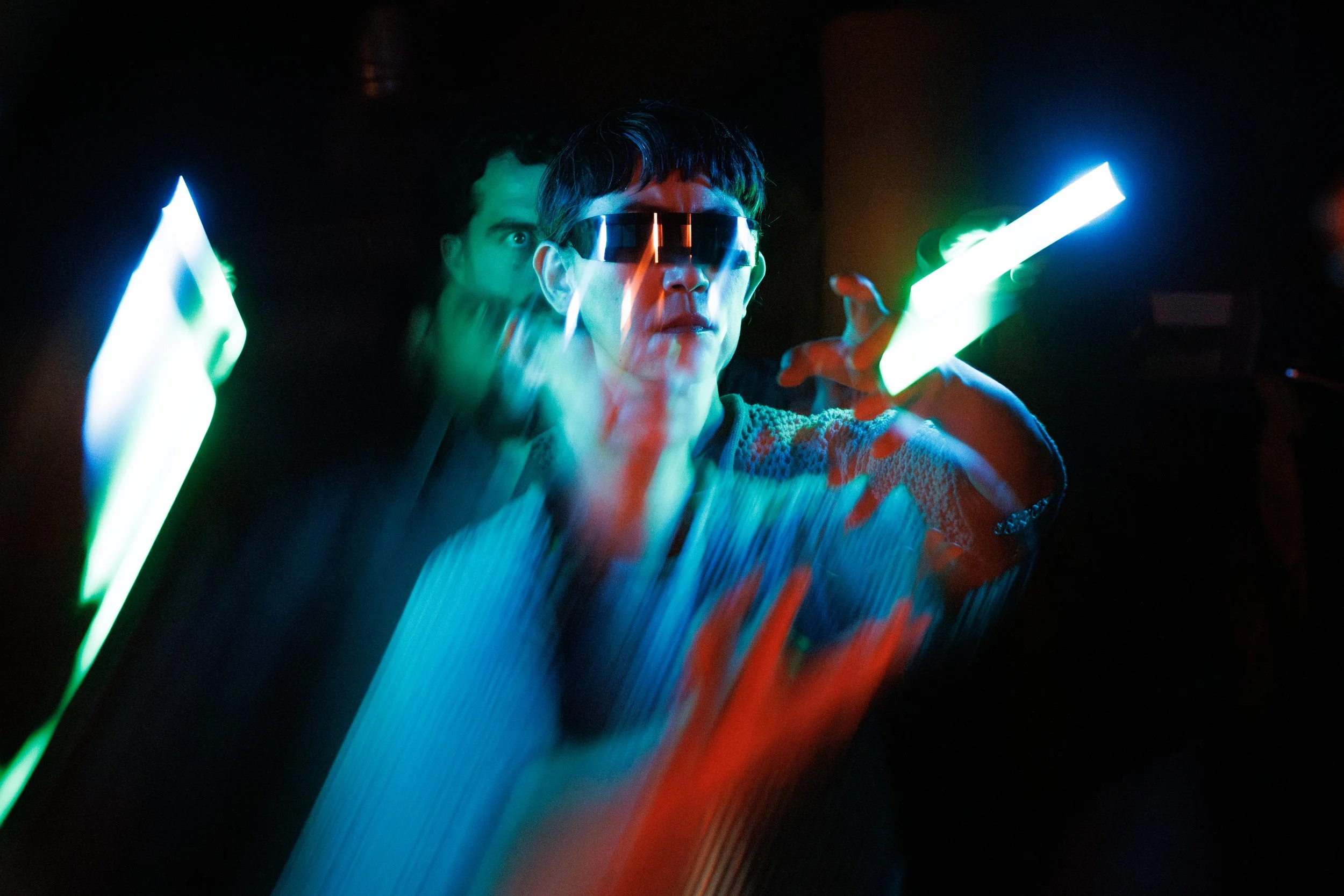
photo: Maria Baranova
In September 1968, in an interview in Cahiers du Cinéma #204, Philippe Garrel agrees that the camera is an instrument of torture.
In 2003, in a different war, in a different city, we shout “the whole world is watching” at the riot cops, believing witness and documentation protects revolution.
In 2026, onscreen, small in the distance, looking past the camera, Pimprenelle Noël asks: “If you look long enough at the camera lens, does it go out of focus?” We hear her voice through the speakers, and also in the room.
In 2005, in “Regular Lovers” Philippe Garrel re-creates his lost doc, re-making shots from “Actua One” from memory, staging with actors and sets scenes of revolutionary actions he’d participated in and witnessed over three decades earlier.
In 2011, Object Collection shares an early one-off lo-fi version of their “Actua 1” at Presents Gallery. And again, in 2013, a new iteration at Invisible Dog Art Center.
In 2026, I sometimes struggle to remember a time before multichannel everpresent media-dump, before the unrelenting spittle of content-flood, where quantity and mundanity and atrocity drown curiosity in like a half-inch of poisoned churning.
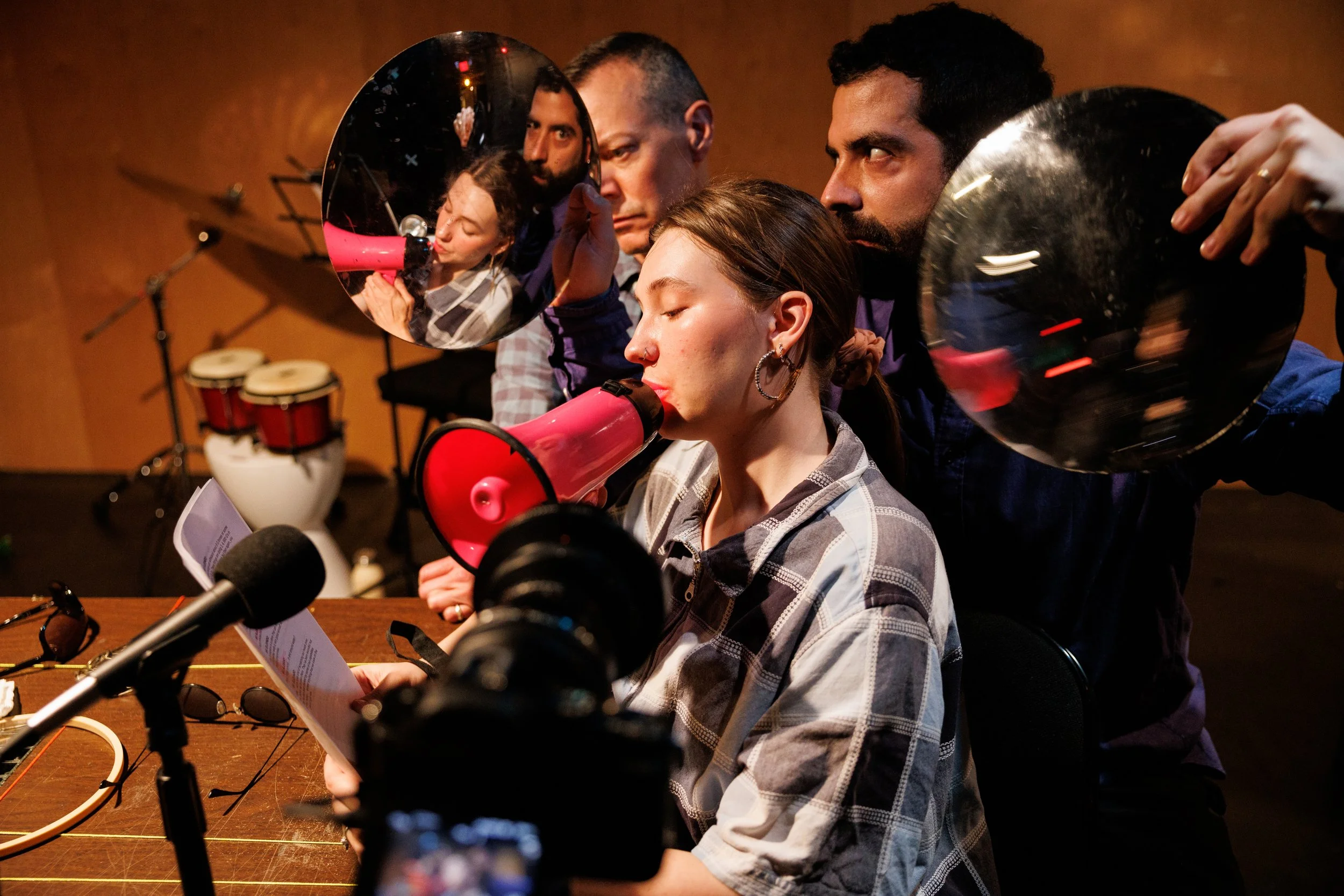
photo: Maria Baranova
In 1970, Jean-Luc Godard, in the journal Afterimage, writes “Que Faire” [What is to be done?]. It includes:
“18. To [make political films] is to describe the wretchedness of the world.”
“19. To [make films politically] is to show the people in struggle.”
In 1793, Jacques-Louis David paints “The Death of Marat”, an oil depicting the assassination of the radical journalist and the painter’s friend, Jean-Paul Marat. The painting makes Marat into a symbol, a kind of martyr of the revolution.
In March 2026, Object Collection premieres a newly reworked version of their “Actua 1” at Collapsable Hole in the depths of Westbeth in the West Village in New York. The show runs March 12th-22nd. It is written by Kara Feely and Travis Just, with Music by Just and Production Design by Feely. Video by David Pym, Sound by Robin Margolis, and Lighting by Celia Krefter. It is performed by Just, Yuki Kawahisa, Daniel Allen Nelson, Pimprenelle Noël, Nicolás Noreña, and Timothy Scott. It is scrappy and pushy and odd and funny and smart and aching.
In 1970, Godard, in “Que Faire” [What is to be done?] writes:
“32. To [make films politically] is to dare to know where one is, and where one has come from, to know one's place in the process of production, in order then to change it.”
“33. To [make films politically] is to know the history of revolutionary struggles and be determined by them.”
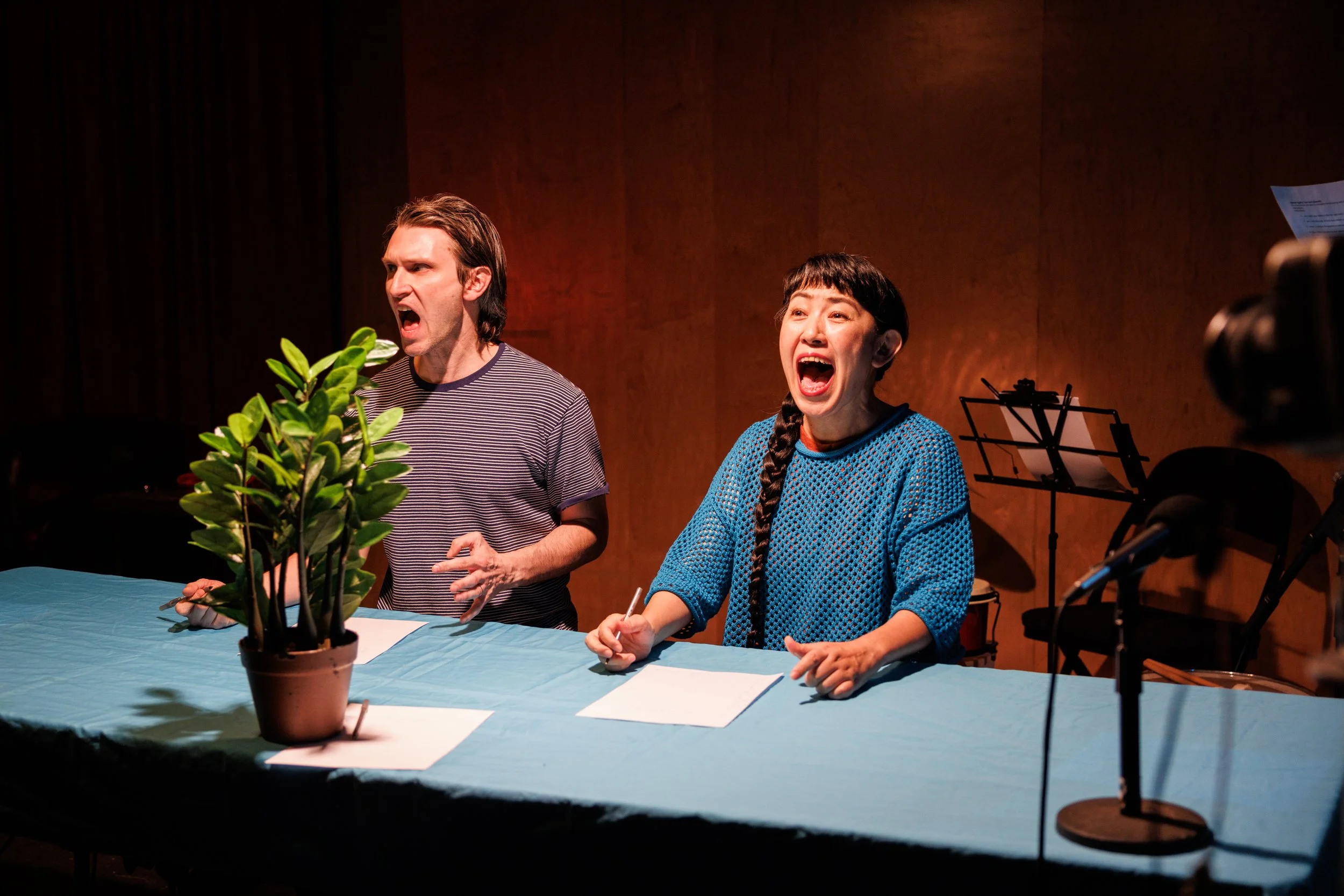
photo: Maria Baranova
In May 1968, at 2am, on Friday the 10th, the French National Police attack the protestors, injuring hundreds, fighting, making arrests until dawn. The police violence was broadcast live on the radio, as it occurred.
In 2014, the Cinémathèque Française discovers Philippe Garrel’s original print of “Actua One” in their archive, simply mis-filed. They restore the film and screen it.
In 2026, Object Collection’s “Actua 1” is a turbulent poetic live art cinema performance, jumpcutting across time and place to show us a loosely twined string of “revolutionary newsreels”. And at its center, questions about documentary and memory and performance and revolution and media, haunt and inspire, perhaps wondering “what is to be done?”
Actua I runs March 12-22 at the Collapsable Hole. Purchase tickets here.