
By Alex Aguirre
The Million Underscores is back with an exquisitely absurd collage of a play titled after Kate Bush’s debut album, The Kick Inside. Like Bush, director Nicolás Noreña is uncompromising in his dedication to his unique artistic vision, resulting in a show that is both exhilarating and a treat for the mind.
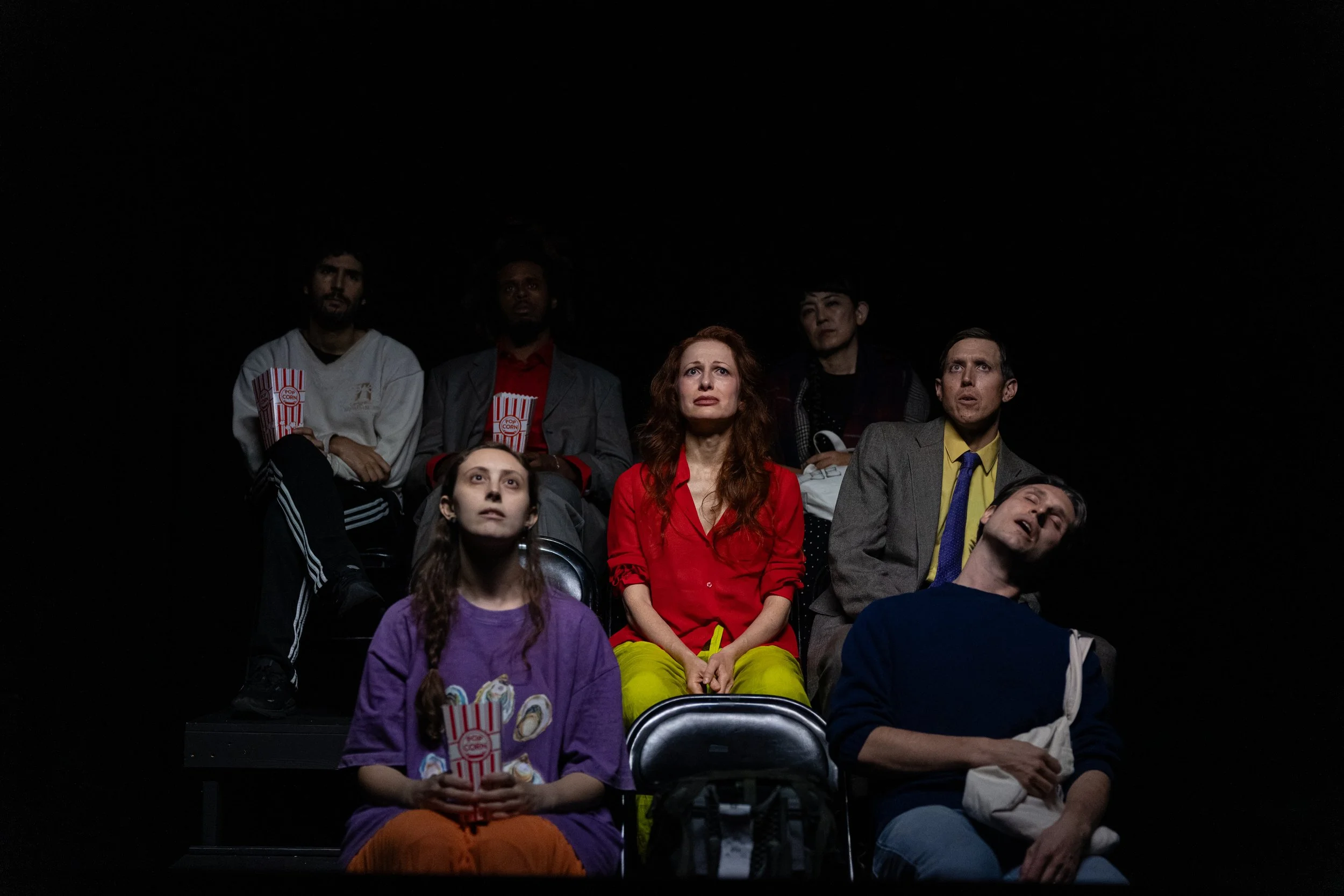
Photo Credit Jose Miranda
The show begins with a woman named Alenka ( Tatyana Kot) weeping in a movie theater while the rest of the audience files out. The first scene sets up the show beautifully, which in my interpretation is a kaleidoscopic quest of one woman piecing together what other people mean to her while staring deep into the otherworldly heart of the chaotic universe. Besides Kot, the shape-shifting ensemble is composed of Benjamin Forster, Yuki Kawahisa, Essence Lotus, Frankie Placidi, Timothy Scott, and Felix Teich, who all play multiple characters. The Kick Inside is a tapestry of scenes woven together by 13 playwrights, among them the granddaddy of New York City experimental theater, Richard Foreman (with text inserted directly from his open-source online notebooks), alongside downtown theater legend Jess Barbagallo, and 13-year-old Marvin Just (the son of Object Collection co-founders Kara Feely and Travis Just). This experiment in sourcing writing to fuel a singular vision is compelling because you can see and feel the interplay of minds on stage in a way that feels synergistic and exciting. Noreña and the rest of The Million Underscores are especially adept at collecting a series of mysterious events floating at the precipice of the unconscious and giving them a body.
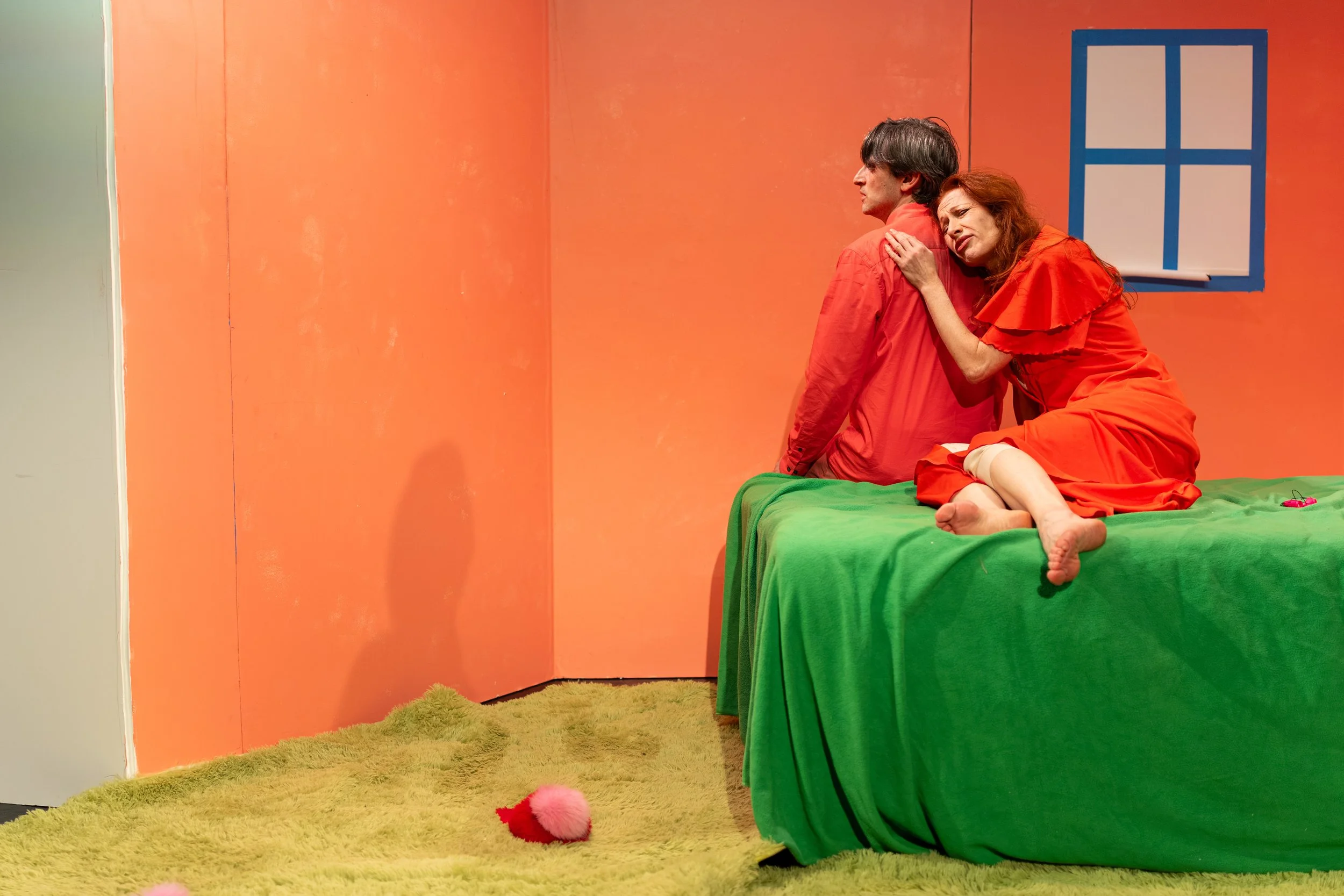
Photo Credit Jose Miranda
The play is filmic and imagistically wrought but does not include a single screen. Instead, Noreña achieves this effect by having the actors adjust large rectangular set pieces rigged to a system of clotheslines to minimize, maximize, or otherwise alter the stage image. This way of shaping space injected a sense of structure and aesthetic intention into the freewheeling nature of the show in a way that deeply served to clarify the show as a play of both people and things. The sound design by Robin Margolis and live foley conducted by Marija Kovačević added to the overall ambience and texture to the jocular rhythms of the piece.
The show is ultimately a celebration of life’s unpredictability and our willingness to embrace its strangeness. Alenka is entirely receptive to the chaos around her: whether her room is talking to her, a dry-cleaning employee is warning her of alien abduction, or a disemboweled dog is offering up wisdom, she leads with her heart.
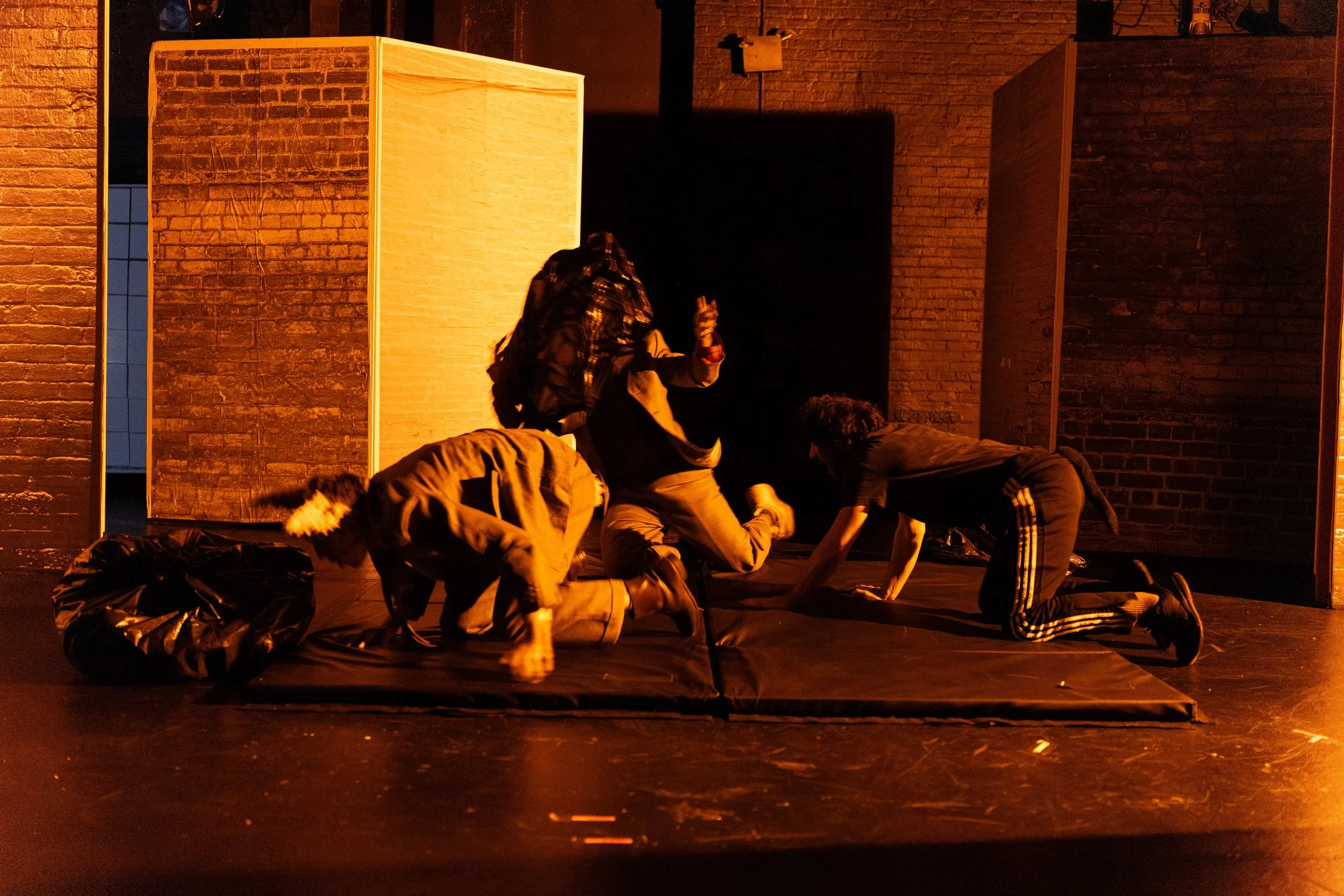
Photo Credit Jose Miranda